




From the very moment digital currencies emerged, they attracted massive attention from people all around the world. This was due to many factors, but the main one was the opportunity to earn income—additional income for some, and even primary income for others.
In this article, we’ll talk about one of the ways to earn with crypto: mining. Specifically, we’ll look at the possibility of earning income from mining digital currencies without any specialized equipment—just using a portable computer, a laptop.
To learn more about the mining process itself, its origins, how it has evolved over time, and how it works today—including how much money it can potentially bring—you can refer to the article titled “Mining.”
How can you earn crypto using a laptop?
Digital currencies attract a huge number of users due to their significant income-generating potential. And there are many different ways to earn with crypto, allowing everyone to find an option that fits their skills, resources, and goals. Below is a brief overview of the main methods:
- Trading is one of the most common ways to make money with crypto. The main idea is to profit from price fluctuations of a digital asset. You can earn both from price increases and decreases—what matters most is predicting the future price movement correctly.
- Investing involves long-term capital allocation into cryptocurrencies with the expectation of value appreciation. There are a few key aspects to consider: your money is “locked” for a certain period; income is delayed and comes over time; success heavily depends on choosing the right assets to invest in.
- Mining. Unlike the previous methods, mining usually doesn't require human participation or a trading strategy. The main requirement is acquiring and setting up specialized equipment. Mining works by solving complex problems on the blockchain, which results in the creation of new units of cryptocurrency.
- Staking is a mining alternative for blockchains that use a different consensus algorithm. It involves purchasing and locking a certain amount of coins in your wallet. By doing so, the user becomes a validator, verifying transactions and earning rewards in the form of new coins.
- Airdrops imply free distribution of cryptocurrency as part of promotional campaigns to increase awareness. To participate, users typically need to complete simple tasks—such as subscribing to a project’s social media account or sharing posts.
- Alternative earning methods (P2E, L2E, M2E). Recently, new models for earning with crypto have emerged.
- P2E (Play-to-Earn) allows users to earn income by playing blockchain-based games;
- L2E (Learn-to-Earn) rewards users for learning;
- M2E (Move-to-Earn) pays users for physical activity.

Mining on a laptop: how it used to be
To bring new units of digital currencies into circulation, certain actions must be performed. For some cryptocurrencies, this process occurs through staking—users (validators) purchase and lock up a certain amount of tokens in exchange for the right to validate transactions and add them to the blockchain.
Other cryptocurrencies use a different mechanism to release new units—called mining. It works like this: users perform complex computations using special hardware. The first to find a valid solution gains the right to add the transaction to the blockchain.
In both cases, miners and validators are rewarded with a certain amount of digital currency for their work. These procedures are what ensure a steady issuance of new coins into circulation.
When the first digital currency—Bitcoin—was launched, very few took crypto seriously. However, users needed some incentive to mine, so the reward for each mined block was set at 50 BTC. People mined Bitcoin just for fun and later spent it on small purchases.
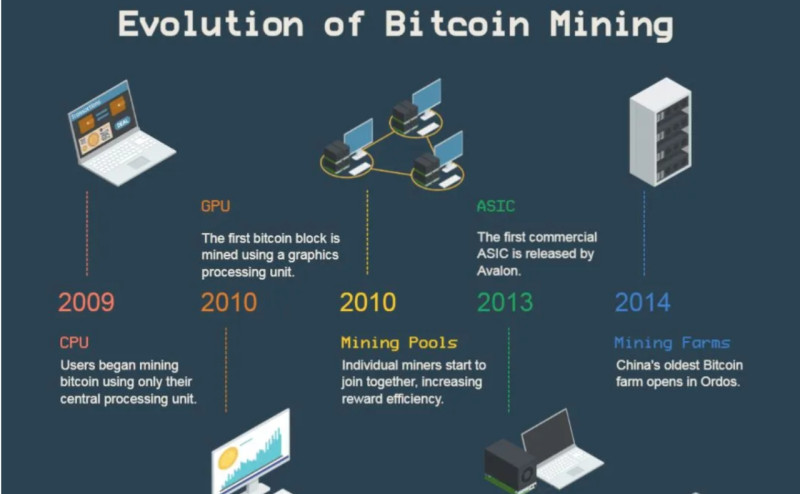
Back then, the price of 1 BTC was less than $1. If only users had known how much the value of the first cryptocurrency would rise in just a few years, they wouldn’t have been so quick to give it away. But at the time, no one realized its true worth.
Moreover, no special equipment was required to mine Bitcoin—you could do it from any regular computer, including a laptop. As a result, almost anyone could participate in mining, and it was mostly done as a hobby.
However, as more users joined the Bitcoin network and the price surged, the mining process became increasingly complex. It eventually reached the point where mining without specialized equipment became practically impossible.
Mining on a laptop today: what cryptocurrencies you can mine
From what we’ve just discussed, it may seem like the era of laptop mining is long gone. But that’s not entirely true. While mining Bitcoin with just a laptop is indeed no longer feasible, there are still several cryptocurrencies that can be mined without specialized hardware.
In fact, some projects are openly opposed to the use of powerful ASIC miners, making their coins intentionally more accessible for mining with regular CPUs and GPUs. Here are a few digital currencies that can still be mined using a laptop or desktop computer:
1.Monero (XMR) is one of the leading privacy-focused coins, ensuring confidential and anonymous transactions. On the market since 2014, consistently ranked in the top 50 cryptocurrencies. It remains one of the most profitable and liquid coins that can be mined on a PC.
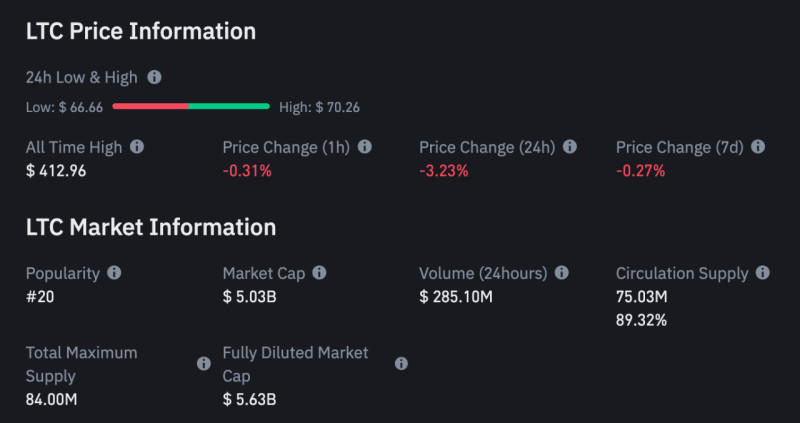
2.Litecoin (LTC) is the first "fork" of Bitcoin, based on its original code. A cheaper alternative to BTC, often referred to as “digital silver.” It’s easier to mine, has high liquidity, and low transaction fees. The current block reward is 6.25 LTC.
3.Ethereum Classic (ETC) is a spin-off of the Ethereum blockchain. Unlike Ethereum, which has transitioned fully to a PoS (Proof-of-Stake) consensus model and is no longer mineable, ETC still uses PoW (Proof-of-Work). The reward for each mined block is 3.2 ETC.
4.Bitcoin Gold (BTG) is another Bitcoin fork, popular among miners. It’s fairly easy to find mining pools that support BTG mining.
5.Vertcoin (VTC). This coin was specifically designed to make mining accessible to a broader audience. Thanks to user-friendly mining software, you can mine it solo without joining a pool. The block reward is 25 VTC.
6.Zcash (ZEC) is a widely used cryptocurrency for fast, private transactions. ZEC is more efficiently mined in pools to ensure steady payouts.
7.Dogecoin (DOGE) is the first meme coin, which gained enormous popularity. With an unlimited supply, it can be mined indefinitely. DOGE consistently ranks in the top 20 cryptocurrencies. It's best mined in a pool or using GPUs rather than a CPU.
What are the other mining options?
If solo mining on a laptop seems too difficult or inefficient, there’s another option: joining a mining pool. Let’s take a closer look at what that means and how it works.
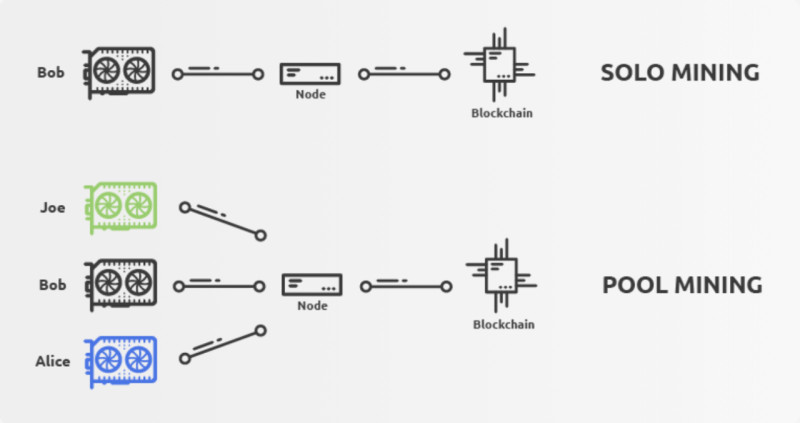
A mining pool is a group of users who combine their computing power to mine cryptocurrency more effectively. Each participant contributes the processing capabilities of their device to boost the collective efficiency of the mining process.
These groups allow users without powerful specialized equipment—including those mining on laptops—to receive a stable income. Participation in a pool increases each user's chances of receiving a reward.
Here’s how mining pools operate
Users join a pool and install special software on their devices, enabling communication with the pool’s central server.
The server breaks down incoming tasks into smaller sub-tasks (called shares) and distributes them among the participants. Each miner is responsible for solving a portion of the overall task, which significantly reduces the complexity of the work for each user.
Once a miner solves their share, they submit the result back to the server, which verifies it. The server also tracks each participant’s contribution to ensure fair reward distribution.
When the pool successfully solves a block and adds it to the blockchain, it receives a reward. This includes a fixed block reward and all transaction fees associated with that block.
The reward is then distributed among the pool participants according to their contribution. Each mining pool uses its own payout system, such as proportional or PPS (Pay-Per-Share) models.
Which laptop is suitable for mining
So, if you decide to try mining on a laptop, you need to choose a device suitable for this purpose. Regardless of which cryptocurrency you plan to mine, it’s important to understand that this is a power-intensive process, requiring sufficiently powerful hardware.
Weak devices are only suitable for familiarizing yourself with how the mining process works; they are not suitable for making real profits. In most cases, integrated graphics cards lack sufficient power, so you may need to purchase an external GPU.
More expensive laptop models have more powerful graphics cards; however, their price may significantly exceed the budget of a beginner miner. Also, a good cooling system is essential, as mining uses a lot of resources and can lead to overheating.
As for technical requirements, the minimum recommended specs for a mining laptop are: at least 4 GB of RAM, at least 4 GB of video memory, and an operating system such as Windows, macOS or the latest version of Linux.
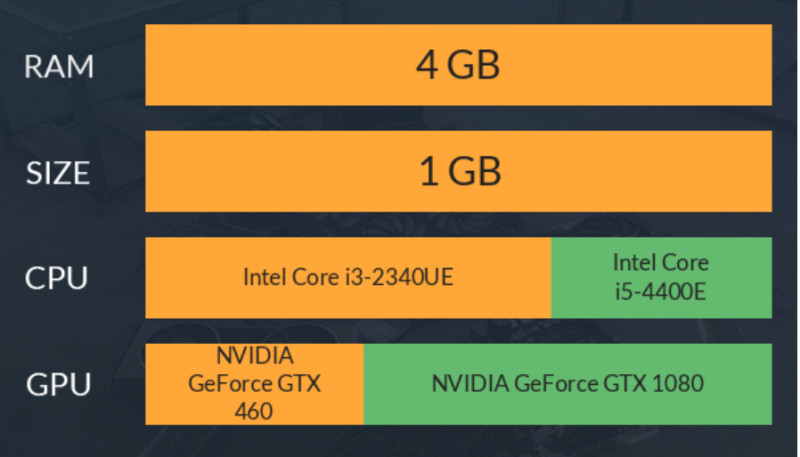
In many respects, a laptop is inferior to a desktop PC due to its compact size. However, it does have one significant advantage—autonomous operation, meaning you can work off the battery. This is especially helpful in case of a sudden power outage.
Another important element for mining digital coins is installing suitable software. Note, however, that some programs are designed only for specific coins and/or certain types of equipment.
Based on the above, we can conclude that an ideal mining laptop should have these features:
- Powerful processor;
- High-capacity SSD storage;
- Dedicated graphics card (GPU);
- Long battery life;
- Quality cooling system.
- Typically, all of these criteria are met by so-called gaming laptops.
Features of mining on a laptop
There are some important features to consider before you start mining on a laptop. Let’s look at them in detail. The first thing to remember is that a laptop was not designed specifically for cryptocurrency mining.
Therefore, it’s crucial to take good care of your device and avoid overheating. Monitor the laptop fans and prevent dust and dirt from accumulating, as this will increase heat generation. Also, you can use special software to monitor the device’s temperature.
Mining is resource-intensive, which leads to rapid wear and possible damage. To save your computer’s resources, you can configure mining software not to use the laptop’s resources at 100%.
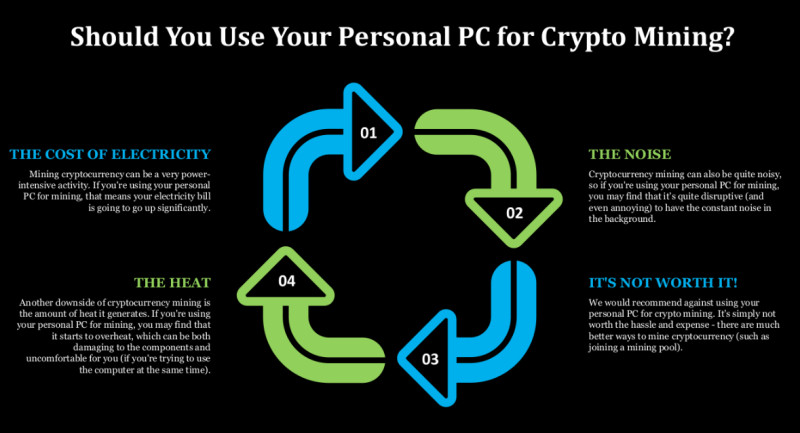
Moreover, completely maxing out your system for mining isn’t necessary, as the potential increase in profits is minimal. Meanwhile, mining in the background allows you to perform other tasks at the same time.
Keep in mind that mining software is classified as malicious by most antivirus programs. Before installing such software, disable your antivirus or whitelist your mining programs.
Because of the limited power of laptops, especially their GPUs, some users try to connect an external graphics card to boost performance. However, the cost of such equipment can exceed the price of the laptop itself.
A brief comparison of mining on a laptop vs. a desktop PC is given in the table below:
| Parameter | Laptop | Desktop PC |
| Performance | Lower | Higher |
| External GPU support | Yes | Yes |
| Cooling system | Worse | Better |
| Autonomous operation | Yes | No |
| Power consumption | Lower | Higher |
How much can you earn?
Probably the most interesting question for anyone who wants to try mining on a laptop: how much can you earn? And is it possible to earn anything at all this way? Let’s try to find out here.
Mining digital currencies without buying special equipment sounds attractive. However, you shouldn't expect easy money, since laptops simply aren't powerful enough to compete with more advanced hardware.
It's practically impossible to give an exact answer, as earnings will depend on several factors: the specific cryptocurrency you’re mining, the cost and source of electricity in your region, and other factors.
In any case, mining on a laptop is best viewed as a way to get acquainted with the mining process rather than as a serious source of income. Real profits will hardly amount to hundreds of dollars, if any profit is made at all.
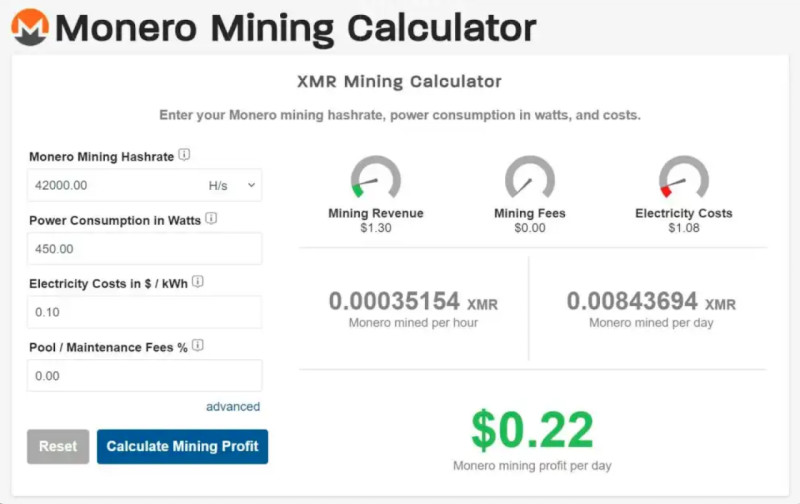
On average, earnings on a regular laptop may be less than one cent to $1 per day, while a powerful gaming laptop could make up to $10. But don’t forget to deduct electricity costs, which in some cases may exceed your entire income.
In addition, since mining is a very power-consuming process, the laptop releases a huge amount of heat. Therefore, in hot weather or a warm climate, you may need extra cooling for your device and room, which adds further expenses.
Advantages and disadvantages
Like any other way of making money, mining on a laptop has both advantages and disadvantages. Before deciding whether to mine crypto on your laptop, it’s worth weighing the pros and cons.
Advantages:
- Accessibility. You don’t need to buy special equipment. Many people already own a laptop and can try mining to learn and maybe earn some money;
- Lower electricity consumption. Since a laptop isn’t super powerful, it also doesn’t use much electricity, even under heavy loads. Thus, expenses on power are unlikely to exceed potential income, which sometimes happens with specialized equipment;
- Simple setup. Setting up your laptop for mining is relatively easy for any user. All you need is mining software;
- Autonomous operation. One major advantage laptops have over desktops is the ability to work without a power supply for some time, which can help during sudden outages.
Disadvantages:
- Low profitability. Compared to ASIC mining, laptops offer much less profit, mostly because mining high-demand coins like Bitcoin makes no sense due to extreme competition;
- Limited range of mineable cryptocurrencies. Because laptops don’t provide high computational power, you can only mine coins whose algorithms and difficulty permit mining without specialized gear;
- Hardware wear. Since mining is power-hungry and stresses the laptop heavily, it leads to accelerated wear, especially the cooling system, which is rarely designed for such loads.
Conclusion
Among all the options for earning from digital currencies that require almost nothing to get started, mining on a laptop looks quite appealing. You don’t need to buy specialized equipment or monitor and analyze the markets.
All you need is a laptop and mining software. However, despite the simplicity, do not expect large profits. The main reason is the limited power and performance of a laptop.
By their characteristics, laptops simply cannot compete with more powerful devices, so mining high-demand coins like Bitcoin is not feasible. But you can consider other coins with lower complexity and more suitable algorithms.
Don’t forget about additional costs, especially for electricity and inevitable hardware wear due to this intense workload. Still, compared to any other device, mining on a laptop has one clear advantage: the ability to work autonomously.


 Back to articles